
Fires in high-rise and commercial buildings spread fast, and in a densely built city like Mumbai and Thane, the margin for error is small. A proper fire fighting system installation is not just a regulatory checkbox — it is the single biggest factor separating a building that protects its occupants from one that doesn’t. This guide walks through what a complete fire fighting system installation covers, why it matters for high-rise and commercial projects, and what to look for when planning one for your building.
What Does a Complete Fire Fighting System Include?
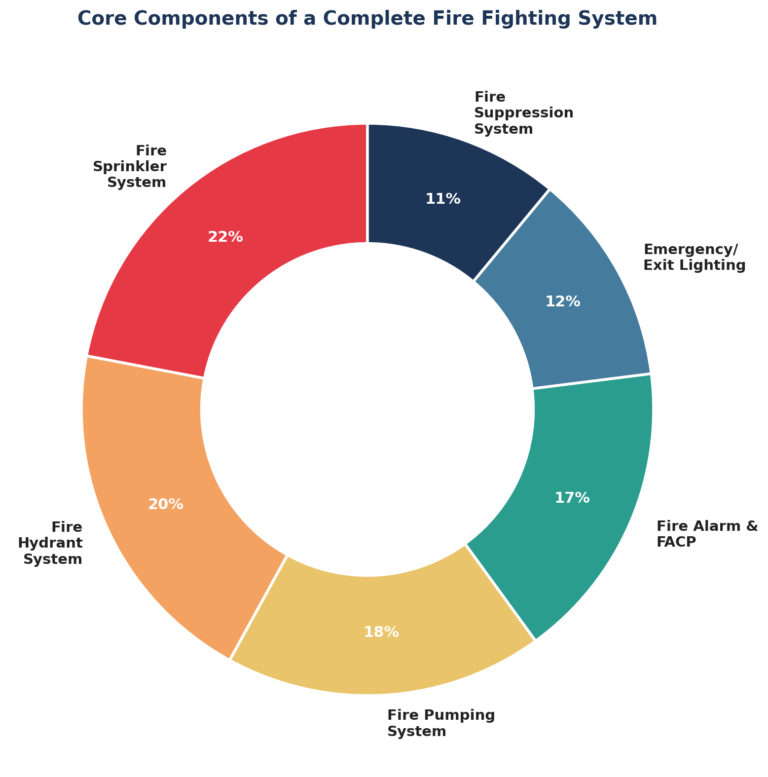
A fire fighting system installation is rarely just one piece of equipment. For high-rise residential towers, IT parks, malls, and industrial facilities, it is an integrated network of components working together to detect, contain, and extinguish fire while giving occupants time to evacuate safely.
Fire Sprinkler Systems
Automatic sprinklers detect heat and release water directly at the source of a fire, containing it before it spreads to other floors or zones.
Fire Hydrant Systems
Wet-riser and hydrant systems give firefighters and building staff a pressurized water supply on every floor — critical for effective high-rise firefighting response.
Fire Pumping Systems
Electric, diesel, and jockey pumps maintain the water pressure required to keep sprinklers and hydrants operational during an emergency, including power outages
Fire Alarm Installation & FACP Programming
Smoke and heat detectors, manual call points, and a Fire Alarm Control Panel (FACP) work together for early detection. Correct FACP programming, testing and commissioning ensures alarms trigger the right response — sounders, exit lighting, and pump activation — without false alarms.
Emergency & Exit Lighting
Battery-backed lighting along evacuation routes keeps stairwells and exits visible even if mains power fails.
Fire Suppression Systems
For server rooms, electrical panels, and kitchens, gas-based or specialized suppression systems protect assets where water-based systems aren’t suitable.
Why Fire Fighting System Installation Is Critical for High-Rise Buildings
Vertical structures create unique risks: longer evacuation times, stack-effect smoke spread, and firefighting access limited to internal systems for the upper floors. A well-designed fire fighting system installation directly addresses these risks by:
- Containing fire at its source through sprinklers, buying evacuation time
-
Ensuring firefighters have adequate water pressure at every floor via hydrant systems
-
Triggering early, accurate alerts through properly programmed fire alarm systems
-
Keeping evacuation routes lit and visible during power failure
-
Meeting fire NOC requirements needed for occupancy certificates and insurance
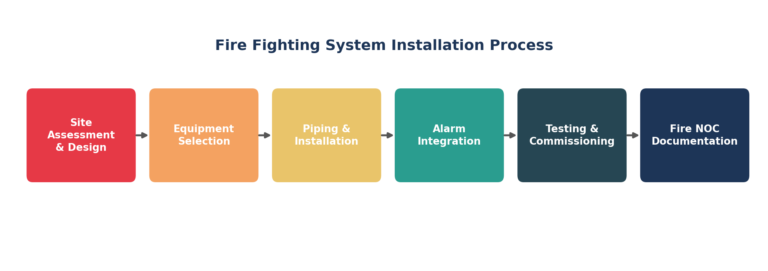
Step-by-Step: How Fire Fighting System Installation Works
1. Equipment Selection
Sprinklers, hydrants, pumps, and alarm hardware are selected based on building height, water demand calculations, and the specific fire load of each zone.
2. Piping & Installation
Fire-rated piping is routed through risers and floor plates, coordinated closely with electrical, HVAC, and plumbing works to avoid clashes — a key reason experienced MEP contractors are preferred for this stage.
3. Alarm Integration
Detectors, call points, and sounders are wired back to the FACP, with zoning configured to pinpoint the exact location of an alert.
4. Testing & Commissioning
Every pump, valve, and detector is tested under simulated conditions before handover, with results documented for the fire department and building owner.
5. Fire NOC Documentation
Compliance is verified against the Maharashtra Fire Prevention and Life Safety Measures Act, 2006, which sets out the minimum fire fighting installations required for different building categories across the state.
For the full statutory requirements, refer to the Maharashtra Fire Services official portal, which publishes the Act, rules, and NOC procedures for building owners.
Common Mistakes to Avoid When Installing a Fire Fighting System
-
Treating firefighting as an afterthought instead of coordinating it with electrical, HVAC, and plumbing design from day one
-
Under-sizing pumps or piping to cut costs, leading to inadequate pressure at upper floors
-
Skipping proper FACP programming and zone testing before handover
-
Using contractors unfamiliar with Maharashtra’s fire NOC documentation process, causing occupancy delays
- Ignoring ongoing maintenance and annual re-certification once the system is commissioned
Why Choose Vaishali Enterprises for Fire Fighting System Installation
Since 2017, Vaishali Enterprises has delivered end-to-end fire fighting system installation for high-rise residential towers, commercial complexes, and industrial facilities across Mumbai and Thane. As a full-scope MEP contractor, fire safety work is planned in tandem with electrical, HVAC, and plumbing systems from the outset, reducing clashes, delays, and rework.
Our fire fighting portfolio includes sprinkler and hydrant systems for multi-tower residential developments such as Dosti West County (8 towers, 30 floors) and Kalptaru Parkcity Immenssa (2 towers, 29 floors), high-rise firefighting work for Vijay Sureksha Orovia (3 towers, 25 floors), and combined electrical & firefighting installations for industrial and commercial projects including Antariksha Logipark and Grand Plaza Food Mall.
Explore our full Firefighting & Fire Alarm Installation Systems capabilities, or see the complete range of MEP services we offer for high-rise and commercial buildings.
You can also browse our completed projects to see fire fighting and MEP work delivered across Thane and Mumbai.
Conclusion
-
A fire fighting system installation is one of the most critical investments in any high-rise or commercial building — protecting lives, meeting compliance, and securing occupancy approvals. Getting the design, installation, and commissioning right the first time, with a contractor who understands both the engineering and the regulatory process, saves significant cost and risk down the line.
Ready to plan your fire fighting system installation? Consult our fire safety experts at Vaishali Enterprises today.